
Academic vigor. Active learning. Meaningful challenge.
Steamboat Mountain School offers a K–12 education in Steamboat Springs, Colorado, that combines challenging academics with hands-on learning. Across Lower, Middle, and Upper School, students build subject knowledge by asking questions, solving problems, creating original work, and sharing what they learn.
We call this approach academic vigor. Students take an active role in their education, developing the curiosity, independence, and confidence to engage deeply with unfamiliar ideas.
What does academic vigor look like?
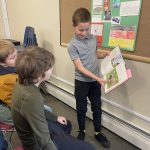
Academic vigor connects intellectual challenge with purposeful work. Kindergarteners build reading and math skills through exploration and collaboration. Middle school students bring a dramatic work from the page to the stage, considering how their choices shape an audience’s experience. Seniors research and complete an independent capstone project, then present their work to the school community.
These experiences ask students to make decisions, apply knowledge, and take responsibility for their learning.
Lower School Academics: Kindergarten–Grade 5
Lower School students build foundations in reading, writing, and mathematics through hands-on lessons, creative exploration, and collaboration. Science, Spanish, art, music, and strings broaden their learning.
In kindergarten, multisensory phonics instruction uses the Orton-Gillingham approach, while tactile math activities help children explore mathematical ideas. Morning meetings and shared classroom routines support social and emotional growth alongside academic development.
Teachers monitor progress through classroom work, feedback, performance tasks, and periodic assessments, including MAP testing in reading and math.
Middle School Academics: Grades 6–8
Middle School combines challenging, standards-aligned coursework with opportunities to develop independence, leadership, and strong relationships.
Applied Math and Writing Labs help students strengthen essential skills. Scheduled office hours provide time for direct support from teachers, while field experiences connect classroom learning with hands-on exploration. When students visit Heart Mountain alongside their humanities study of Japanese American incarceration during World War II, they connect classroom learning with the place where that history unfolded. Experiences like these help students understand the human impact of what they study, examine complex questions, and return to the classroom with deeper understanding. The educational value lies in the preparation, faculty guidance, and reflection that connect the experience to the curriculum.
Through the annual play, leadership opportunities, and eighth-grade speeches presented to the school community, students practice communicating clearly and contributing their ideas.
Upper School Academics: Grades 9–12
Upper School challenges students to think independently, explore their interests in depth, and prepare for college and life beyond school. Academic work emphasizes inquiry, application, and opportunities to pursue original questions.
Students in grades 11 and 12 can undertake honors coursework that extends core classes through additional independent study and research. Students may take up to two honors courses per mod to balance the demands of this work.
Every senior completes a capstone passion project focused on making, serving, solving, or doing something. Students propose an idea, research their subject, develop their work, and present their learning and final product during graduation weekend.
Questions About Academics
What grades does Steamboat Mountain School serve?
Steamboat Mountain School serves kindergarten through grade 12. Lower School includes grades K–5, Middle School includes grades 6–8, and Upper School includes grades 9–12.
Does Steamboat Mountain School offer AP courses?
Steamboat Mountain School offers its own advanced and honors coursework rather than AP courses. This approach gives teachers flexibility to emphasize deeper inquiry, independent research, interdisciplinary connections, and practical applications. Students are allowed and encouraged to take the AP exams.
How do Middle School and Lower School students receive academic support?
Middle School students have scheduled office hours for direct support from teachers. Applied Math and Writing Labs provide additional opportunities to develop mathematical and writing skills.
How does hands-on learning support academics at Steamboat Mountain School?
Students apply classroom knowledge through projects, field experiences, performances, and independent research. These experiences give students opportunities to solve problems, collaborate, and explain their thinking while deepening their understanding of academic subjects.
How does the academic program change as students move through K–12?
Lower School builds foundational skills in reading, writing, and mathematics alongside curiosity and collaboration. Middle School introduces greater academic challenge, independence, and leadership. Upper School expands opportunities for deeper inquiry, honors coursework, and independent research, culminating in a senior capstone project.
What advanced academic opportunities are available in Upper School?
Students in grades 11 and 12 can pursue honors coursework that extends core classes through additional independent study and research. Students explore topics of their choosing and apply what they learn beyond the standard course requirements.
What is the senior capstone project?
Every senior completes an independent passion project focused on making, serving, solving, or doing something. Students pitch an idea, research their subject, develop a final product or outcome, and present their work to an audience during graduation weekend.
How does Steamboat Mountain School teach early reading skills?
Steamboat Mountain School’s kindergarten program uses multisensory phonics instruction informed by the Orton-Gillingham approach. Students connect sounds and letters through hands-on experiences that engage multiple senses, helping them build foundational reading skills.
How do students develop public speaking and communication skills?
Students practice sharing ideas through classroom collaboration, performances, and formal presentations. Middle School opportunities include the annual play and eighth-grade speeches to the school community. Seniors present their capstone projects, explaining both their process and what they learned.